It’s been over a decade since U.S. Treasury Secretary Jacob Lew first announced a sweeping project to redesign the nation’s currency notes, beginning with the $10 bill. After years of research, development, and bureaucratic delays, the Bureau of Engraving and Printing has confirmed that the first denomination in the new “Catalyst” family — the redesigned $10 note — will be ready for production no later than 2026.
This isn’t just a cosmetic refresh. The Catalyst series represents the most significant overhaul of American paper currency since the color-shifting, large-portrait redesign of the 1990s and 2000s. Every denomination from the $5 through the $100 will eventually receive new anti-counterfeiting technology, modernized designs, and — for the first time in U.S. currency history — raised tactile features that allow blind and visually impaired people to identify bills by touch.
The Catalyst Timeline: When Each Denomination Arrives
The BEP is rolling out the Catalyst family in a staggered sequence over roughly a decade. According to a Treasury Department Office of Inspector General (OIG) report and confirmed by the BEP’s own disclosures, the production schedule is:
- $10 note — 2026
- $50 note — 2028
- $20 note — 2030
- $5 note — 2032 to 2035
- $100 note — 2034 to 2038
An important distinction: these are dates when each denomination is estimated to be ready for production, not the date the public will see them in circulation. Once the BEP begins printing a new denomination, notes first go to Federal Reserve Banks, then to commercial banks, and finally into retail circulation. Based on past currency introductions, it typically takes 6 to 12 months for a new denomination to become common in everyday transactions, with high-volume denominations spreading faster.
The $1 and $2 notes are excluded from the Catalyst program entirely. Redesign of the $1 bill is prohibited by law, and neither denomination is a significant counterfeiting target.
Why the $10 Goes First
The decision to lead with the $10 rather than a higher-volume denomination like the $20 was deliberate. The $10 balances security priorities with minimal disruption — it’s common enough to circulate quickly but doesn’t carry the logistical weight of the $20, which accounts for a far larger share of ATM dispensing and point-of-sale transactions. Starting with the $10 lets the BEP prove the new production technology at scale before tackling the denominations that would cause the most disruption if something went wrong.
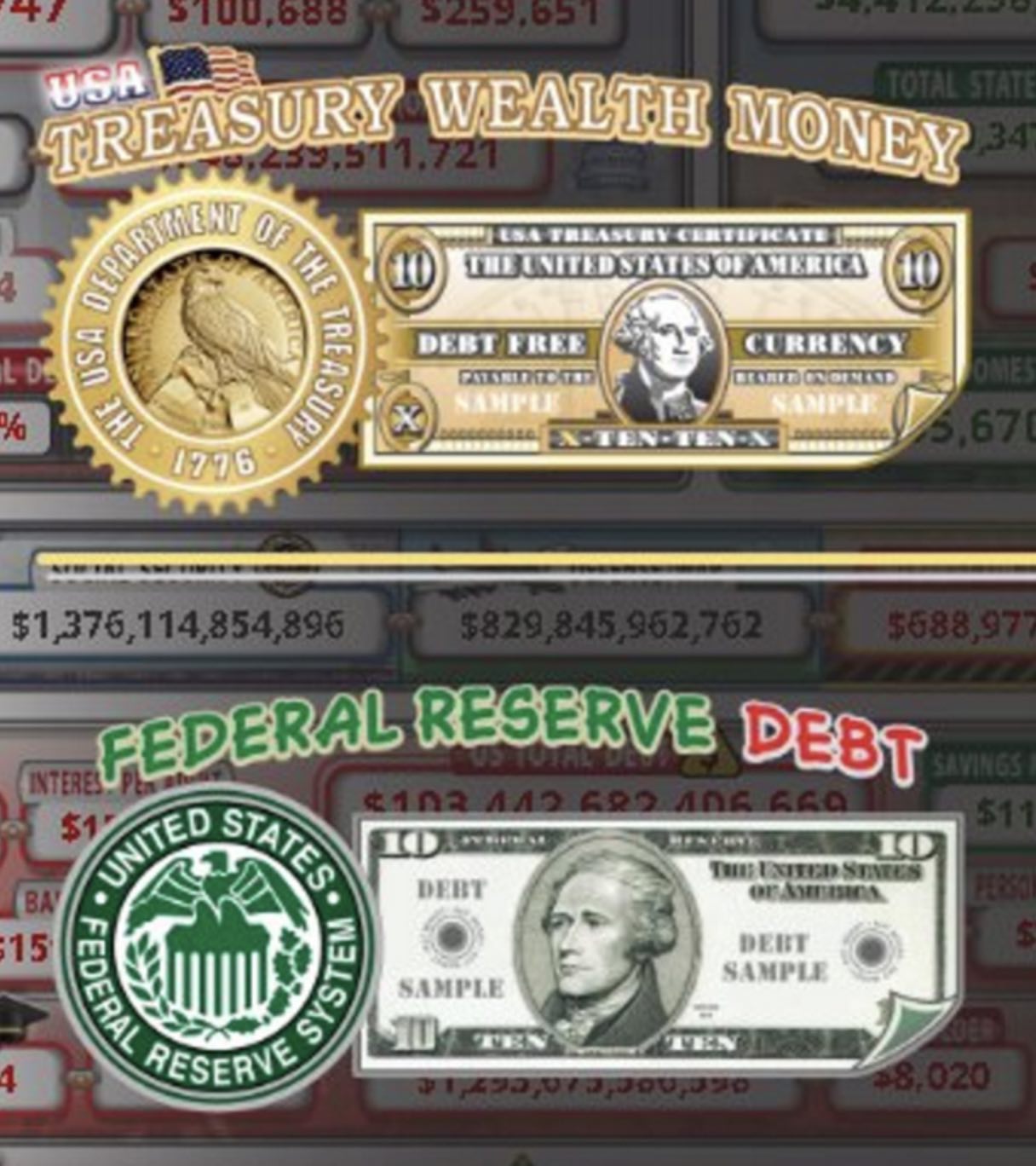
The $50 follows second because it has shown recent counterfeiting vulnerabilities. The $20 — despite being the most counterfeited denomination — is deliberately pushed to 2030 to avoid logistical strain until the new technology and processes are proven.
What’s New: Security Features and Raised Tactile Features
The Catalyst redesign introduces several layers of new anti-counterfeiting technology, though specific design details remain classified until approximately six months before each note is issued. What we do know:
Raised Tactile Features (RTF) are the signature innovation. Every denomination in the Catalyst family will include raised features applied through an intaglio printing process — the same high-pressure technique used for fine details on current bills, but adapted to create tactile elements that can be felt by touch. This is the first time U.S. currency will be distinguishable by denomination through touch alone, a long-sought accessibility improvement for the blind and low-vision community. The RTF also functions as an additional security feature, since the intaglio process is extremely difficult to replicate with consumer printing equipment.
Enhanced optically variable devices — elements that change appearance depending on the viewing angle — will be more sophisticated than the color-shifting ink and security ribbons on current notes.
Advanced watermarking techniques will be incorporated alongside the existing watermark technology.
Machine-readable elements are being specifically designed for high-speed automated authentication, meaning ATMs, currency counters, and self-checkout machines will be able to verify new notes electronically. This is a significant upgrade from current machine-readable features and reflects how much cash handling has been automated since the last redesign cycle.
The Long Road to Production
The path from announcement to production has been anything but straightforward. The development process has involved two parallel tracks:
The Banknote Development Process (BDP), formalized in 2012, governs the design and testing of new note layouts, security features, and production methods. The Technology Development Process (TDP), begun in 2013, handles the research and maturation of the underlying security technologies before they’re incorporated into specific denominations.
Overseeing both tracks is the Advanced Counterfeit Deterrence (ACD) Steering Committee, comprising stakeholders from Treasury, BEP, the Federal Reserve Board, the Federal Reserve System, and the U.S. Secret Service. The ACD committee determined that the denominations would be “redesigned collectively, as part of a family” sharing similar architecture but with denomination-specific security features.
The Catalyst $10 entered the BDP concept phase by 2017, while test notes moved through development. Family design activities — internally called “Project Salt” — commenced by defining initial design themes under the overarching “Democracy” theme.
By 2021, the BEP reported that a pilot incorporating two new public security features, the raised tactile feature, a low-vision feature, and new portrait and vignette designs had been completed. Feasibility trials using the intaglio printing process for RTF had begun, with machines capable of printing up to 10,000 sheets per hour at 32 or 50 notes per sheet. An estimated 400,000 sheets of test notes have been evaluated across multiple machines.
The selection of intaglio printing as the method for applying RTF was made in January 2021, a critical decision point that locked in the production approach for the entire Catalyst family.
FY 2026 Budget and Production Readiness
The Federal Reserve’s annual note print orders have included explicit allocations for Catalyst production for several years running. The FY 2026 print order calls for approximately 4.4 billion notes total, down from 4.6 billion in the prior year, but includes dedicated Catalyst $10 allocation.
The BEP has also hired new personnel with what it describes as “unique skills necessary for the Catalyst family” — a signal that production infrastructure is being actively built out rather than simply adapted from existing processes.
No Public Design Preview
Despite over a decade of development and substantial taxpayer investment, no prospective designs have been released to the public. This is by design — literally. According to the OIG report, BEP policy dictates that the design of a new note “is not revealed until six months before a note will issue.” The reasoning is that early public education on specific security features could give counterfeiters a head start.
That means the public likely won’t see the new $10 design until late 2026 or early 2027, depending on when the BEP declares the note production-ready and when the Federal Reserve begins distribution.
Alexander Hamilton will continue to appear on the $10 bill. The 2016 decision to keep Hamilton on the note — influenced in part by his resurgent popularity from the Broadway musical — settled that question early in the Catalyst process.
The Harriet Tubman $20: Where Things Stand
The Catalyst $20 isn’t scheduled for production until 2030, and the question of whether Harriet Tubman will appear on it remains politically fraught.
Treasury Secretary Lew announced in April 2016 that Tubman’s portrait would appear on a redesigned $20, with design concepts to be revealed in 2020. However, a subsequent Treasury OIG investigation found that this announcement “was made outside the formal note development governance structure” — meaning it bypassed the ACD Steering Committee process and did not follow the established committee recommendation framework. As of June 2020, the $20 note had not yet entered formal development procedures within the BDP.
In March 2025, Senator Jeanne Shaheen introduced the Harriet Tubman Tribute Act of 2025 (S. 923), which would require the Treasury Secretary to include Tubman’s portrait on all $20 bills printed after December 31, 2030. The legislation also stipulates that production cannot be delayed more than two years unless it is determined that issuing the bills would create an unacceptable risk of counterfeiting or to the functioning of the U.S. economy.
Whether the legislation advances — and whether the Treasury proceeds with a Tubman design regardless — remains uncertain. The $20 is still years away from the design disclosure window.
What Businesses Should Be Preparing For
The Catalyst rollout will have practical implications beyond the bills themselves. Every device that handles cash — ATMs, self-checkout terminals, vending machines, currency counters, and back-office processing equipment — will need software or firmware updates to recognize and authenticate the new notes.
The staggered rollout was specifically designed to give businesses time to update their equipment between denominations rather than facing a single, disruptive changeover. Industry groups have recommended that businesses begin planning now for software updates and staff training on identifying the new security and tactile features, particularly businesses in cash-intensive sectors.
Older notes will remain legal tender indefinitely. The new Catalyst notes will circulate alongside current designs, just as the post-1996 “big head” notes still circulate alongside the occasional pre-1996 bill.
What This Means for Collectors and Bullion Investors
For collectors, the Catalyst $10 will be the first genuinely new U.S. note design in over a decade, and first-year issues tend to attract numismatic interest — particularly low serial numbers, star notes, and notes from specific Federal Reserve districts. The novelty factor alone should drive demand among currency collectors.
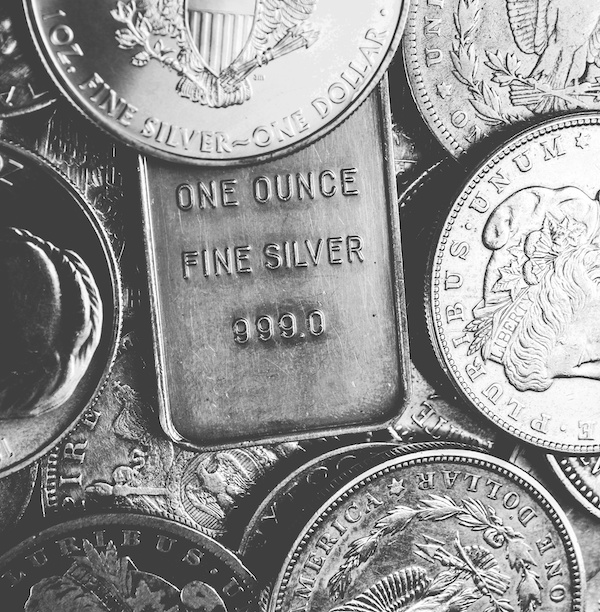
For bullion investors, the Catalyst series is worth watching for a different reason: major currency redesigns historically prompt brief spikes in demand for physical precious metals as a hedge against currency uncertainty, even when the changes are purely security-related. The practical impact is minimal, but the psychological effect of “new money” tends to surface in buying patterns.
Keep an eye on silver prices and gold prices as the Catalyst rollout approaches — any market reaction will likely be short-lived but could present buying opportunities.
Related
- Silver Spot Prices — Live silver pricing
- What is a Silver Certificate?
- Gold Spot Prices — Live gold pricing
- US Paper Money Values
- Best Silver Prices — Compare dealer premiums
- Best Gold Prices — Compare dealer premiums
Sources: BEP Currency Redesign, OIG Report on BEP Redesign Schedule, BEP Confirms 2026 Date for $10 Note, Harriet Tubman Tribute Act of 2025 (S. 923), Catalyst Series Distribution Timeline
Disclaimer: This article is for informational and educational purposes only. It is not financial or investment advice. FindBullionPrices.com is a price comparison platform and does not sell bullion.