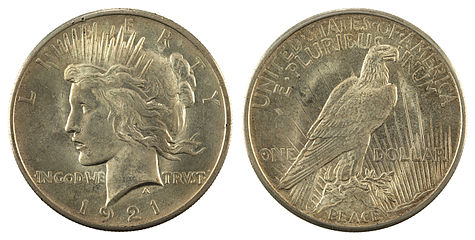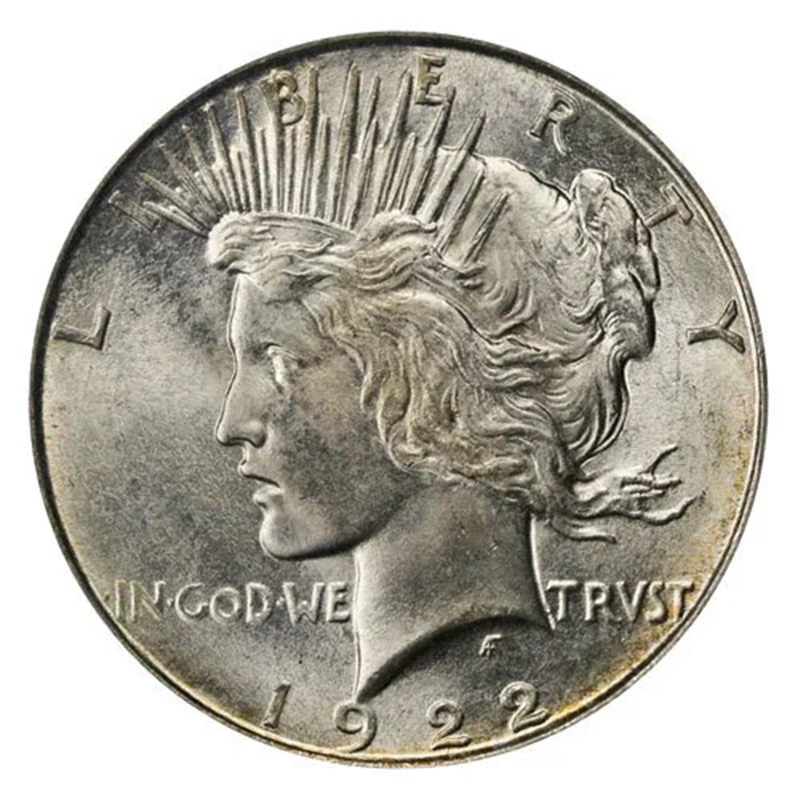
The 1922 Peace Silver Dollar is one of the most widely collected U.S. silver dollars. It remains a foundational coin for both new and advanced numismatists. Although it carries the highest mintage of the series, the year is far from “common” once die varieties, mint-specific diagnostics, and error types are examined.
.jpg)
With millions of surviving examples across grades, and hundreds of documented VAM (Van Allen–Mallis) varieties, this issue offers collectors depth, affordability, and genuine opportunities for premium appreciation.
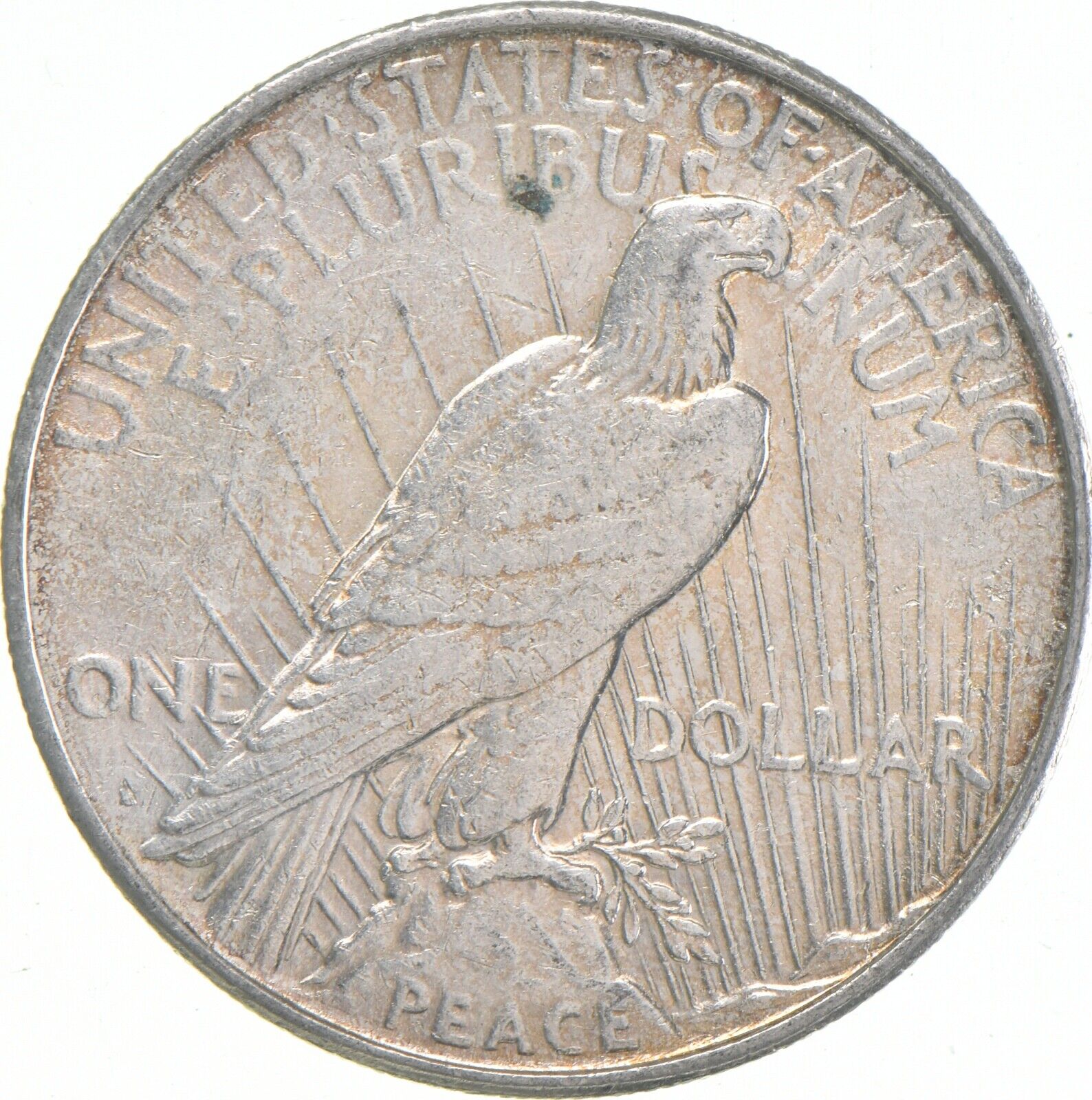
This guide provides an overview of the specifications, mint diagnostics, grading characteristics, value ranges, error varieties, VAM attributions, authentication tips, and current market trends for the 1922 Peace Dollar.
Overview & Specifications
- Coin: 1922 Peace Silver Dollar
- Designer: Anthony de Francisci
- Composition: 90% silver, 10% copper
- Actual Silver Weight (ASW): 0.77344 troy oz
- Diameter: 38.1 mm
- Weight: 26.73 g
- Edge: Reeded
- Mints: Philadelphia (no mintmark), Denver (D), San Francisco (S)
Specifications Table
| Attribute | Details |
|---|---|
| Denomination | $1 |
| Year | 1922 |
| Composition | 90% Ag / 10% Cu |
| ASW | 0.77344 troy oz |
| Total Weight | 26.73 g |
| Diameter | 38.1 mm |
| Thickness | ~2.8 mm |
| Mints | Philadelphia, Denver, San Francisco |
| Designer | Anthony de Francisci |
Historical Context & Why 1922 Is Significant
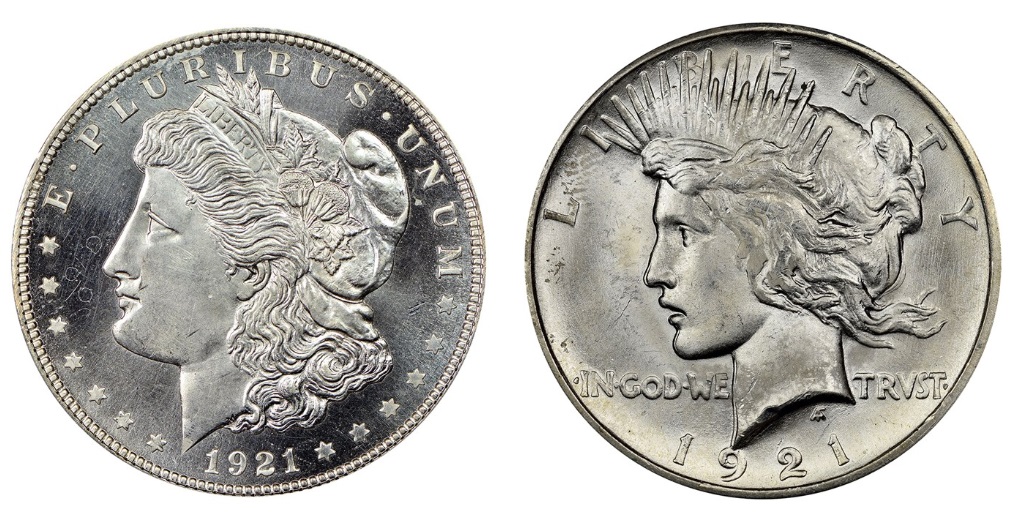
The Peace Dollar series launched in 1921 to commemorate the restoration of peace after World War I. In 1922, the U.S. Mint transitioned from the high-relief 1921 design to a low-relief version better suited for mass production. As a result, 1922 saw over 84 million coins struck, making it:
- The highest mintage year of the entire series
- The most accessible Peace Dollar for collectors
- The most diverse year for die states and VAM varieties
Despite high survival rates, premium value still emerges through condition rarity, mint-specific strike quality, and high-value error varieties.
Mintmarks, Mintage & Collector Diagnostics
Mintage By Mint
| Mint | Mintmark | Mintage | Relative Availability |
|---|---|---|---|
| Philadelphia | None | 51,737,000 | Most common |
| Denver | D | 15,063,000 | Moderately common |
| San Francisco | S | 17,475,000 | Scarcer in higher grades |
Mint-Specific Diagnostics
These features help collectors identify genuine mint characteristics.
Philadelphia (No Mintmark)
- Typically softer central strike, especially in Liberty’s hair and the eagle’s wing feathers
- Most common year/mint combination in the series
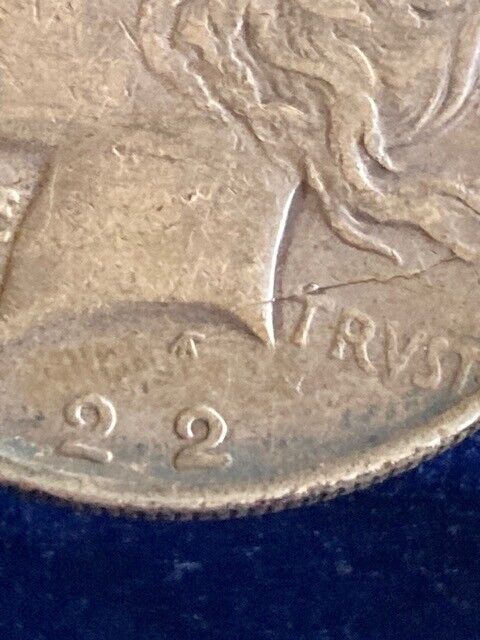
- Many late-stage dies produced dramatic cracks & breaks (popular with VAM collectors)
Denver (D)
- D mintmark located below ONE on reverse
- Often stronger strikes than Philadelphia
- Known for sharp relief in the eagle’s shoulder and rays
- Popular among collectors seeking higher-grade survivors (MS64+)
San Francisco (S)
- Known for grainier surfaces and weaker rim denticles
- Strike quality varies widely
- Frequently displays die polish lines; some varieties exhibit semi-prooflike fields
- Scarcer in MS65 and above — significant premium applies
Value Ranges by Condition (2025 Market)
Values fluctuate with silver spot price, collector demand, and certified census populations.
Ranges below reflect typical retail prices for standard (non-VAM, non-error) examples.
| Grade | Estimated Value Range | Notes |
|---|---|---|
| G–VG | $45–$50 | Primarily melt + small premium |
| F–VF | $50–$60 | Common entry point |
| XF | $60–$75 | Light circulation, strong details |
| AU50–AU58 | $70–$110 | Attractive for type sets |
| MS60–MS62 | $80–$130 | Bag marks common |
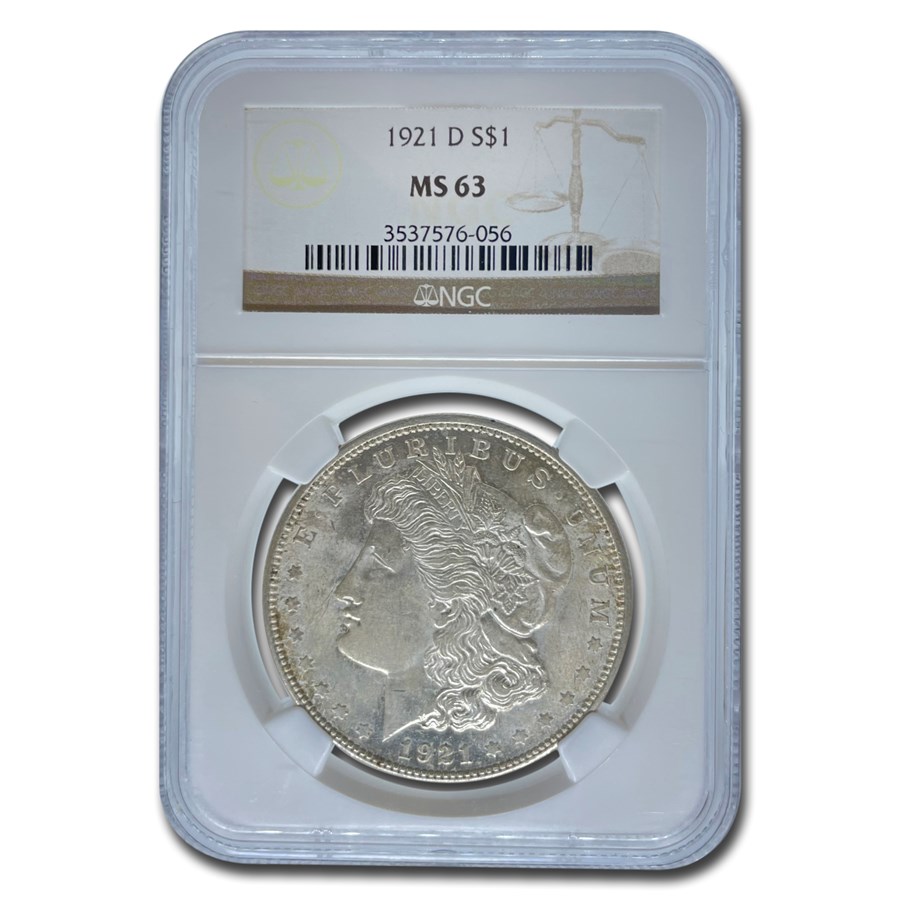
| MS63 | $120–$180 | Popular affordable Mint State |
| MS64 | $160–$275 | Demand strong, especially S-mint |
| MS65 | $250–$450 | Condition rarity for D/S mint |
| MS66+ | Varies widely | Only for premium collectors |
Values based on market averages, NGC/PCGS guides, and recent auction archives.
Melt Value Calculator
The coin contains 0.77344 oz of silver.
Today’s spot = $61.92 → Melt Value = 0.77344 × spot price = $47.89
High-Value Errors & Die-State Varieties
The 1922 year is rich with dramatic errors, partly due to worn dies and heavy production volume.
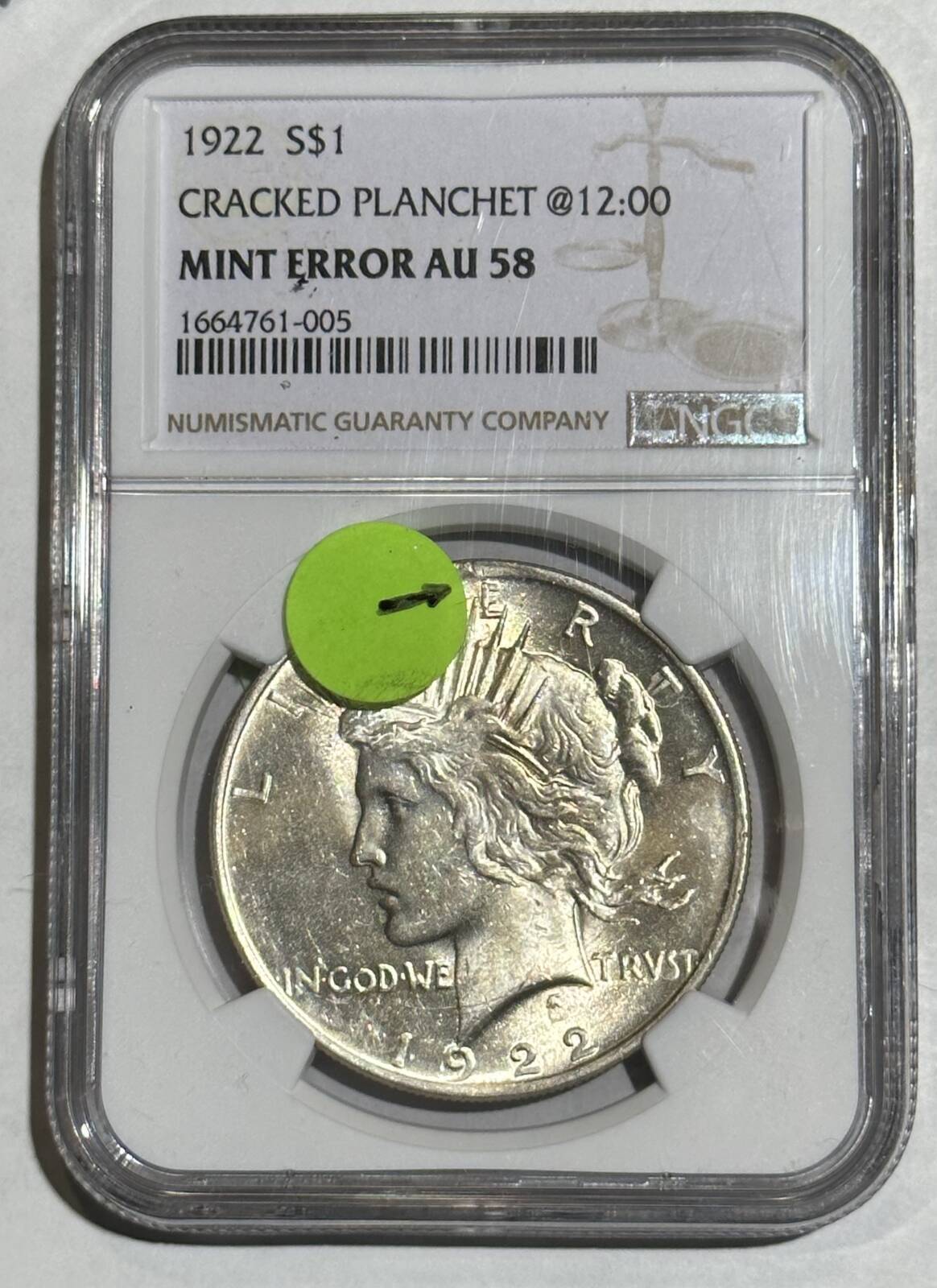
Common & Valuable Errors
| Error Type | Diagnostic | Typical Value |
|---|---|---|
| Die Cracks / Breaks | Raised irregular lines; common on P mint | $80–$150 |
| Retained Cuds | Partial metal break, dramatic raised area | $150–$300 |
| Clipped Planchet | Straight, curved, or ragged clips | $150–$350 |
| Struck Through Grease | Weak/missing details | $60–$150 |
| Lamination Peels | Flaking alloy | $80–$200 |
| Off-Center Strike | Rare; dramatic premiums | $250–$1,000+ |
1922 Peace Dollar VAM Varieties
VAM identification is a major search-intent driver. This table adds strong EEAT value.
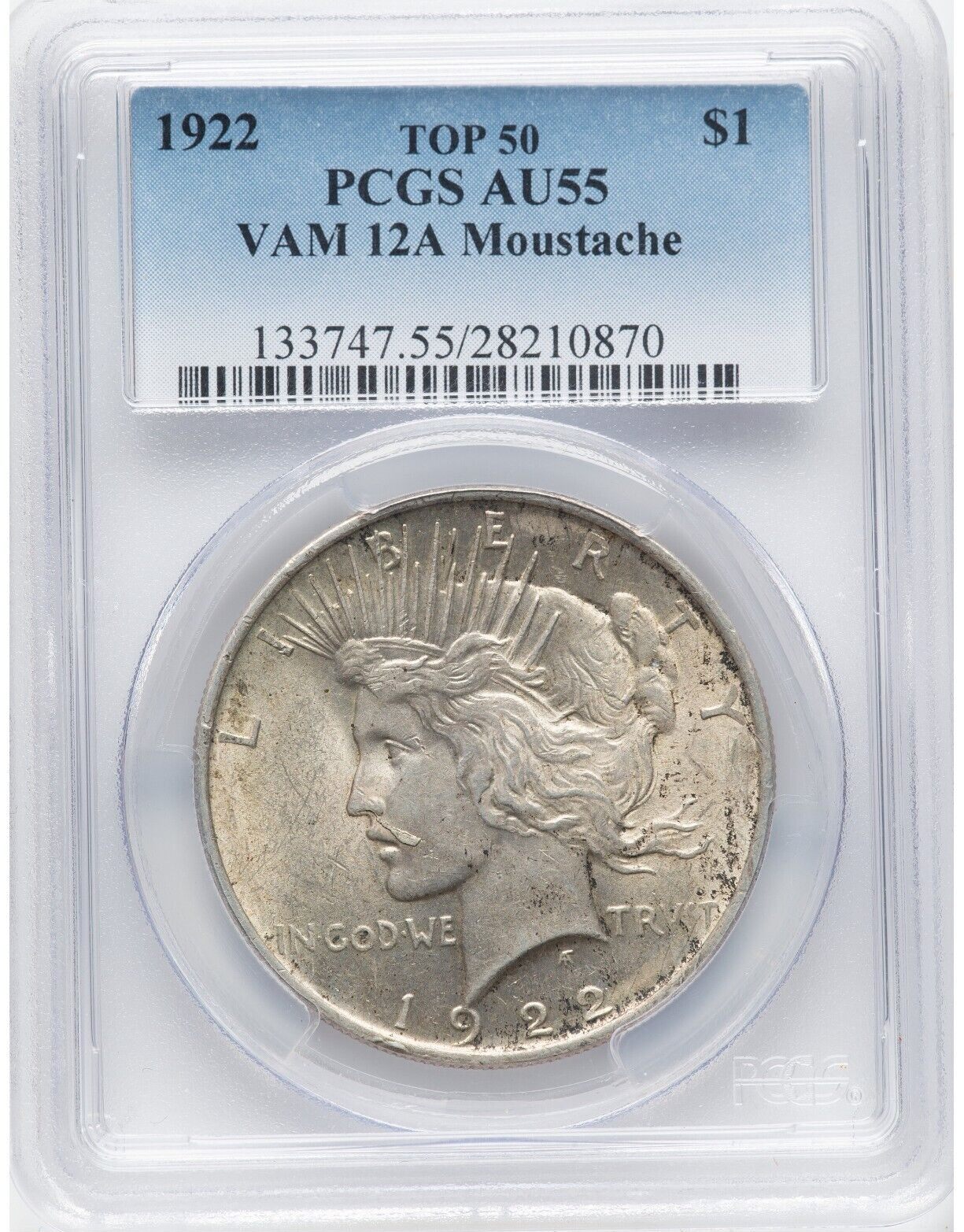
| VAM | Variety Name | Diagnostics | Rarity | Value Impact |
|---|---|---|---|---|
| VAM-12A | “Moustache” Die Gouge | Raised line under Liberty’s nose | Scarce | 3×–6× common value |
| VAM-2 | Doubled Die Reverse | Doubling on UNITED / ONE | Common | 1.5× |
| VAM-3A | Die Break in Tiara | Die crack through rays | Scarce | +$50–$150 |
| VAM-28A | Retained Cud | Large raised metal above eagle’s wing | Scarce | High collector demand |
| VAM-1H | Spike from Neck | Strong raised line | Uncommon | Moderate premium |
Collectors should verify VAMs using PCGS/NGC certification or VAMWorld photographic references.
Authentication & Counterfeit Detection
Counterfeit Peace Dollars exist, often made from base-metal alloys or low-grade silver.
Checklist for Authentication
- Weight: 26.73 g ± 0.1 g
- Diameter: 38.1 mm
- Thickness: ~2.8 mm
- Magnet test: Genuine coins are non-magnetic
- Edge reeding: Should be sharp, evenly spaced
- Sound test: 90% silver produces a high-frequency ring
For high-value coins, professional grading (PCGS/NGC) is strongly recommended.
Peace Dollars have historically held value well during precious-metal volatility due to strong collector demand.
Final Notes
The 1922 Peace Silver Dollar remains one of the most engaging and value-rich coins for collectors and investors alike. With countless variations, accessible entry prices, and historically strong demand, it offers both educational and financial appeal.
This article is for educational purposes only and does not constitute financial advice. Collectors and investors should consult qualified numismatists or precious-metal professionals before making substantial purchases.