The recent decision by the U.S. Mint to temporarily halt sales of silver numismatic products has sparked confusion, speculation, and more than a few exaggerated rumors. To understand what’s actually happening, it helps to zoom out and view these events alongside broader market signals, including record silver prices, delivery delays across major bullion dealers, and statements from industry leaders like APMEX.
These actions reveal stress in the physical silver market, and why both bullion investors and numismatic collectors should pay attention.
The U.S. Mint Sales Pause & Re-Pricing
Across multiple reports, the core facts are consistent:
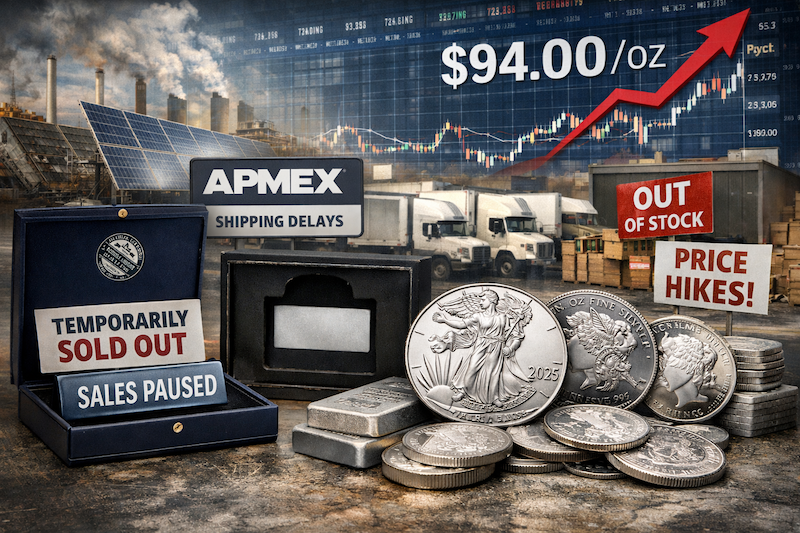
- Silver prices surged to historic highs near $94 per ounce
- The U.S. Mint temporarily removed silver numismatic products (proofs, uncirculated, commemoratives) from sale
- The stated reason was rapidly rising metal costs, not a lack of silver
- American Silver Eagle bullion coins remain available, but only through authorized dealers
- After a brief pause, the Mint implemented large price increases,in some cases nearly 86% overnight
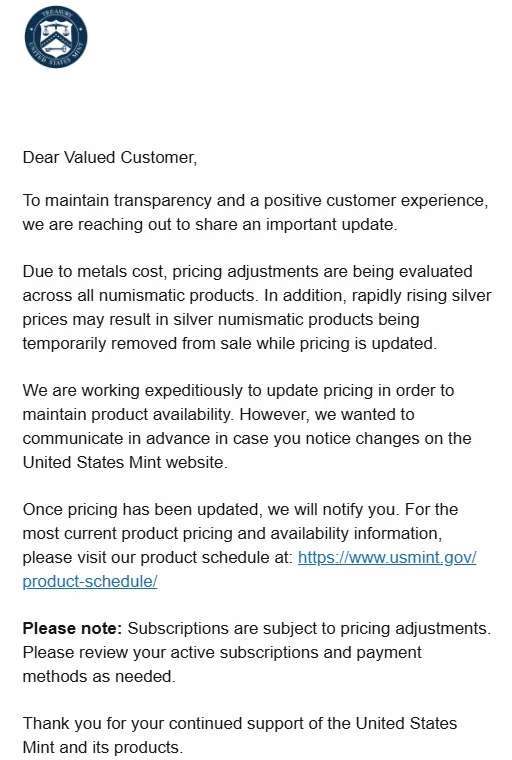
This is not unprecedented. The Mint has paused sales before during periods of extreme price volatility. What is unusual is the speed and magnitude of the price adjustment after a long period of holding retail prices steady while silver climbed.
Why the Mint Had to Pause
The Mint sells numismatic products at fixed retail prices, not floating market prices. When silver moves gradually, that model works. When silver nearly triples in a year, it breaks.
At recent price levels:
- Numismatic Silver Eagles were briefly priced at or below bullion market replacement costs
- Dealers were selling bullion Eagles for $98–$100
- The Mint was still offering proof and uncirculated versions at $91–$95
That pricing mismatch is not sustainable for any issuer, public or private.
The pause was about pricing lag, not metal availability.
This distinction matters, because rumors of the Mint being “out of silver” misunderstand how the system works. The Mint does not sell bullion directly to the public and does not operate like a retail dealer. It must review and formally adjust pricing across its catalog, a slower process than private dealers can manage.
The Bigger Context: Physical Silver Is Tight, Even If It’s Not “Gone”
While the Mint pause itself doesn’t prove a silver shortage, it occurred amid real, observable stress in the physical market:
- APMEX publicly acknowledged extended shipping timelines due to unprecedented demand
- JM Bullion and SD Bullion have both reported order processing and fulfillment delays
- Premiums on bullion coins and bars remain elevated
- Delivery times have lengthened even for common products
The combination high prices, strong retail demand, elevated premiums, and logistical strain is typical of late-stage bull market conditions in precious metals.
Importantly, this stress is not limited to investors. Industrial demand, especially from solar, electronics, electrification, and defense technologies, has become a dominant driver of silver consumption. According to industry data, more than half of global silver demand is now industrial, reducing the buffer that once absorbed retail surges.
What This Means for Numismatic Coins
For collectors and numismatic investors, the Mint’s actions have secondary effects:
- Coins purchased at pre-increase prices now have higher intrinsic value
- New issues face a much higher entry cost, compressing speculative margins
- Secondary market premiums may not scale linearly with Mint price hikes
Historically, numismatic markets often lag bullion moves at first, then reprice unevenly. Truly scarce, historically significant, or low-mintage issues tend to retain collector premiums. Mass-produced modern issues are more sensitive to price fatigue.
This doesn’t mean numismatics are “dead.” It means the easy, low-risk flipping environment of the past 18 months has changed.
Final Perspective
The Mint pause is not evidence of “unobtanium silver.” It is evidence of a silver market operating under exceptional pressure.
During periods of record prices, ETF inflows, industrial demand, dealer delays, and issuer pricing disruptions all occur at once, the correct response isn’t panic, it’s perspective and patience.
Markets like this reward patience, discipline, and an understanding of how physical metals actually move through the system.
That’s as true for bullion investors as it is for collectors navigating today’s rapidly changing landscape.