History, Specifications, and Buying Guide
Before the Euro standardized European payments, a 19th-century treaty came remarkably close to achieving the same goal. The Latin Monetary Union (LMU), formed in 1865, created a network of interchangeable gold and silver coins accepted across borders from France to Greece. The gold coins it produced—most commonly the 20-franc piece—are now prized by both collectors and investors for their precise gold content, historical character, and consistent liquidity.
This guide covers the history behind the LMU, the technical specifications every buyer should know, the major coin types currently available, and what to look for when comparing dealers.
What Was the Latin Monetary Union?
The Latin Monetary Union was established by treaty on December 23, 1865, with France, Belgium, Italy, and Switzerland as founding members. Greece joined in 1868; Spain, Romania, Serbia, Montenegro, and several Latin American nations eventually associated or adhered to the standard.
The union did not create a single currency—each country continued to issue coins under its own name (Francs, Lire, Drachmai, Dinara)—but it standardized weight, fineness, and denominations so that member coins carried equivalent intrinsic value and could circulate freely across borders.
A French 20 Francs coin was accepted in a Belgian market or a Swiss shop at face value because the gold content was identical regardless of which mint struck it.
The Technical Standard
The LMU gold standard was anchored to the French Franc. Every member nation’s 20-franc-equivalent gold coin was required to meet the same specifications:
| Specification | Value |
|---|---|
| Total weight | 6.4516 grams |
| Fineness | 900/1000 (90% gold) |
| Fine gold content | 5.8064 grams (0.18667 troy oz) |
| Diameter | 21 mm |
| Gold purity — karat equivalent | 21.6 karat |
| Bimetallic ratio (gold : silver) | 15.5 : 1 |
| Purity Note: 900 Fine, Not 22 Karat A common error in older guides is describing LMU coins as “22-karat.” That figure applies to British Sovereigns and American Gold Eagles (916.7 fine). LMU coins are struck at 900 fine—21.6 karat. The distinction matters when calculating intrinsic value against gold spot price. |
The bimetallic ratio fixing gold to silver at 15.5:1 worked reasonably through the 1860s and 1870s, but increasing silver production from U.S. mines gradually undermined it. By the 1870s, France and Belgium had suspended free coinage of silver, and the union effectively operated as a gold standard from that point forward. The LMU formally dissolved in 1927, but the coins it produced remained in circulation—and in investor portfolios—long afterward.
The Major Latin Monetary Union Gold Coins
Every 20-franc-equivalent LMU gold coin shares the same 0.18667 troy oz fine gold content. The differences lie in design, mintage volume, date ranges, and collector premiums attached to specific types.
France: 20 Francs Gold Coins
France produced more LMU gold coins than any other member, across several major design types:

Napoleon III (1852–1870): Features the portrait of Emperor Napoleon III on the obverse. Minted across the Second Empire period, these are widely available in circulated grades and form a staple of the random European 20 Francs market.
Angel Type (1871–1898): Depicts the figure of France writing the Constitution, flanked by an angel. A historically significant type often found in higher grades across multiple republic-era issues.
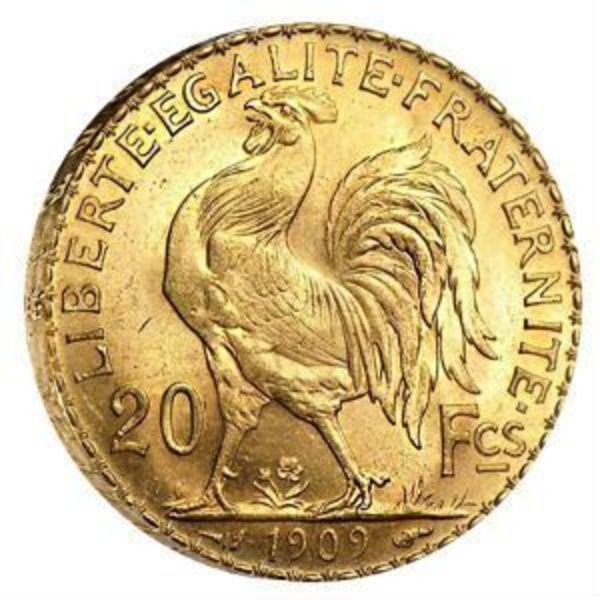
Marianne / Rooster (1899–1914): The most recognized French LMU coin among modern investors. The obverse shows Marianne, the national personification of the French Republic. The reverse features the Gallic Rooster (Coq Gaulois). Minted from 1899 through the outbreak of World War I, the Rooster series has strong modern demand and often trades at a slight premium to older Napoleon types.
All three French types carry identical gold content: 5.8064 grams fine gold, 6.4516 grams total weight, 900 fine.
Switzerland: 20 Francs Helvetia (Vreneli)
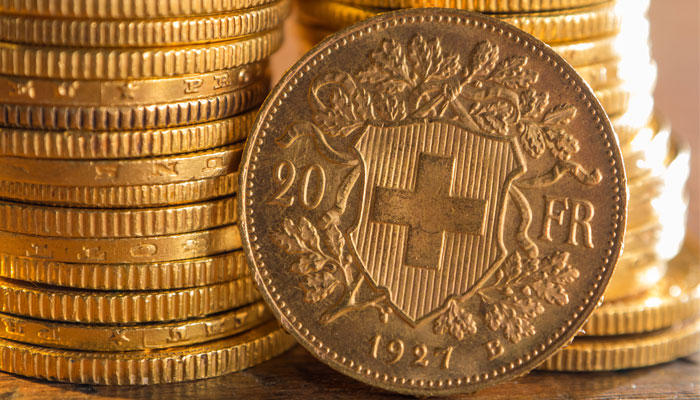
Minted from 1897 through 1949, the Swiss 20 Francs Helvetia—affectionately called the Vreneli—features the bust of a young woman representing Helvetia on the obverse, with the Swiss cross on the reverse. Switzerland’s political neutrality through both World Wars, combined with the long mint run, means high mintage numbers and strong secondary market liquidity. Swiss coins typically trade close to melt value unless in gem uncirculated condition.
Belgium: 20 Francs Gold Coins
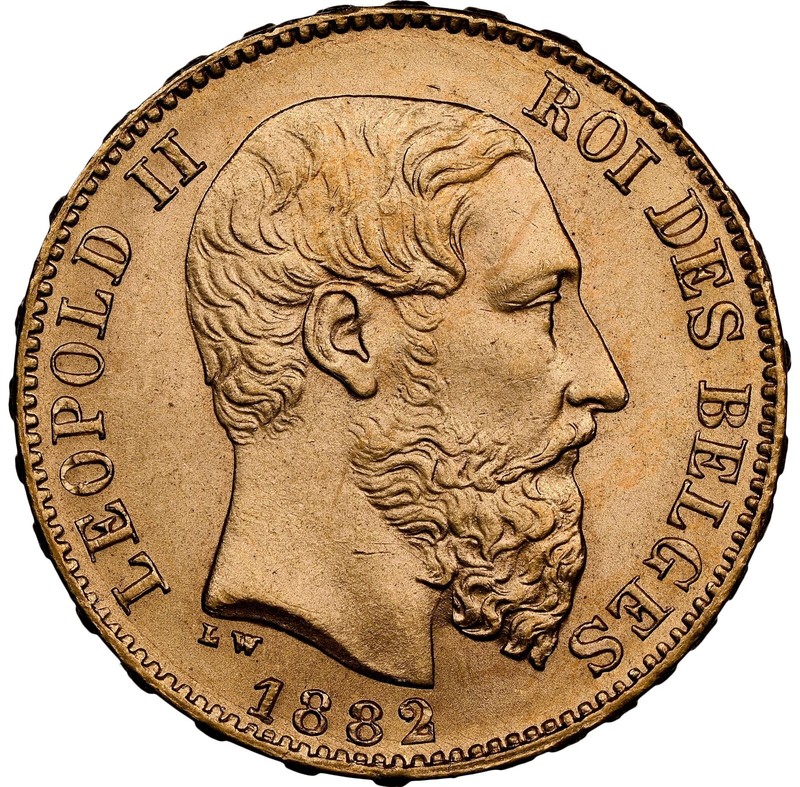
Belgian LMU gold coins feature royal portraits—Leopold I, Leopold II, and Albert I depending on the period. Minted from the 1860s through the early 20th century, Belgian 20 Francs are common in the random European market and largely trade on gold content rather than collector appeal.
Italy: 20 Lire Gold Coins
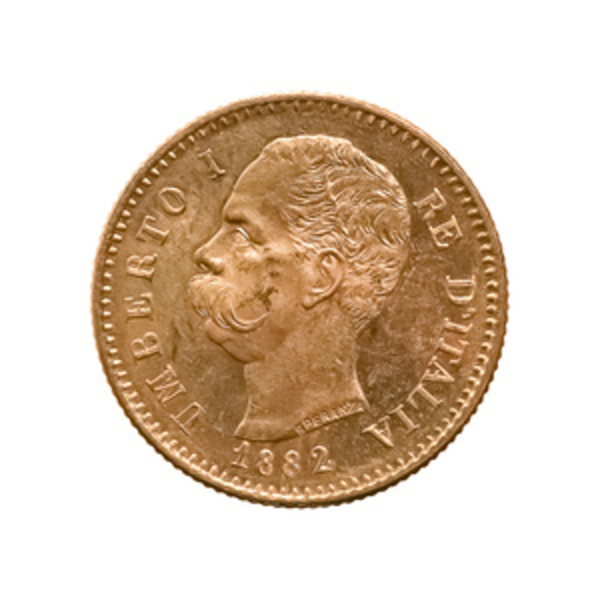
Italy’s LMU coinage bears the denomination “20 Lire” alongside portraits of Victor Emmanuel II and Umberto I from the House of Savoy. Italian 20 Lire coins are somewhat less common in North American markets than French or Swiss issues, which can affect immediate availability—though not gold content or intrinsic value.
Greece: 20 Drachmai Gold Coins
Greece joined the LMU in 1868 and produced gold coins to the union standard under King George I. Greek 20 Drachmai are among the scarcer LMU types on the open market and often attract collector interest independent of gold value, particularly in higher grades.
Austria: 8 Florins / 20 Francs
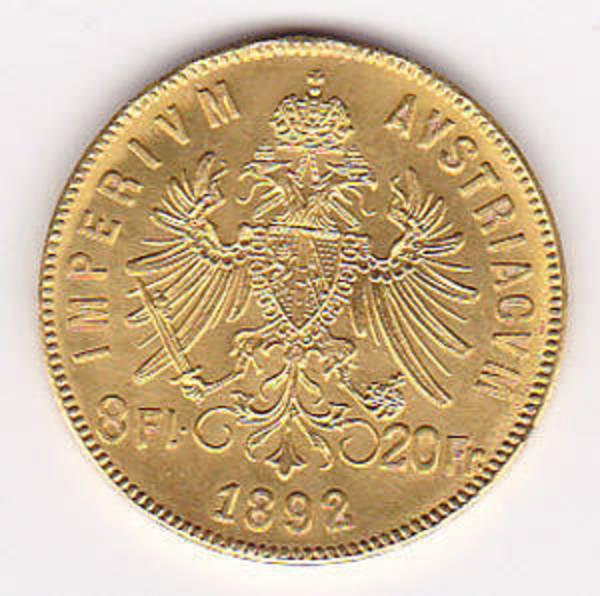
Austria never formally joined the LMU but struck coins to the union standard for international trade. The Austrian piece carries a distinctive dual denomination—”8 Florins” on one side and “20 Francs” on the other—communicating its equivalence to LMU members. These coins feature the portrait of Emperor Franz Joseph I and are recognized by experienced collectors as a technically non-member trade coin that fully conforms to union specifications.
Why Investors Buy LMU Gold Coins Today
Gold Content and Fractional Size
At 0.18667 troy oz of fine gold per coin, LMU 20-franc pieces offer a fractional denomination that sits between a tenth-ounce and a quarter-ounce modern bullion coin. For investors who prefer to accumulate gold incrementally rather than purchasing full troy ounces, LMU coins provide an efficient entry point with recognized, standardized purity.
Lower Premiums Relative to Modern Bullion
LMU coins typically carry lower premiums over spot than newly minted issues such as American Gold Eagles or Canadian Maple Leafs. The trade-off is that they are pre-owned, circulated coins—most will show light handling wear—rather than freshly struck investment pieces. For investors primarily focused on gold content per dollar spent, that distinction rarely affects the decision.
Random European 20 Francs (mixed national origin, dealer’s choice) tend to carry the lowest premiums. French Roosters and Swiss Vreneli often attract modest additional premiums due to higher recognition and demand. Greek issues and select numismatic-grade pieces can command substantially higher premiums that exceed their bullion value.
Liquidity
LMU 20 franc gold coins are well-known to dealers worldwide. The standardized gold content and long production history mean most coin dealers can immediately value and bid on them—a practical consideration for investors who may need to sell quickly.
Historical and Collecting Interest
Beyond raw gold content, LMU coins represent a tangible piece of European monetary history. For collectors, the variety of national designs across identical specifications makes building a type set—one example from each member nation—a natural organizing principle.
What to Know Before You Buy
Random vs. Specific Country: Most dealers offer LMU coins either as random European 20 Francs (any nationality at the dealer’s discretion) or as specific national types. Random lots offer the lowest premiums but no control over design. Specific types—particularly French Roosters and Swiss Vreneli—generally carry a few percentage points more in premium.
Condition and Grade: LMU coins held for bullion purposes are most often in circulated (VF to AU) condition. Uncirculated and gem specimens exist but carry collector premiums that can substantially exceed melt value—appropriate for numismatists, less so for pure gold buyers.
Authentication: As with all pre-1933 gold coins, counterfeits exist. Legitimate weight (6.4516g) and diameter (21mm) verification is a basic starting check. Purchasing from established, reputable dealers with return policies remains the strongest practical protection. Certified examples (NGC or PCGS slabbed) offer additional assurance for higher-value acquisitions.
Premiums Vary by Dealer: Because LMU coins are widely traded, dealer premiums can differ meaningfully. Comparing prices across multiple dealers before purchasing is straightforward and often results in savings of several percentage points on the same coin type and grade.
| Investment Disclaimer Coin prices fluctuate with gold spot markets and vary by dealer and market conditions. This article is informational and historical in nature; it is not financial or investment advice. Precious metals investing involves price risk, and past performance does not indicate future results. Consult a qualified financial advisor before making investment decisions. |
LMU 20 Franc Gold Coins at a Glance
All coins share identical specifications: 6.4516g total weight · 900 fine · 5.8064g fine gold (0.18667 troy oz) · 21mm diameter.
| Country | Denom. | Portrait / Design | Period | Notes |
| France | 20 Fr | Rooster / Marianne | 1899–1914 | Widely available, strong recognition |
| France | 20 Fr | Angel Type | 1871–1898 | Multiple republic issues |
| France | 20 Fr | Napoleon III | 1852–1870 | Common in circulated grades |
| Switzerland | 20 Fr | Helvetia (Vreneli) | 1897–1949 | High mintage, very liquid |
| Belgium | 20 Fr | Leopold I, II, Albert I | 1867–1914 | Trades near melt value |
| Italy | 20 Lire | Victor Emmanuel, Umberto I | 1861–1897 | Less common in N. America |
| Greece | 20 Dr | George I | 1876–1884 | Scarcer; collector interest |
| Austria | 8 Fl / 20 Fr | Franz Joseph I | 1892 restrike | Dual denomination trade coin |
FindBullionPrices.com tracks live dealer pricing on French, Swiss, and European 20 Francs gold coins so you can compare premiums across multiple vendors in real time before you buy.