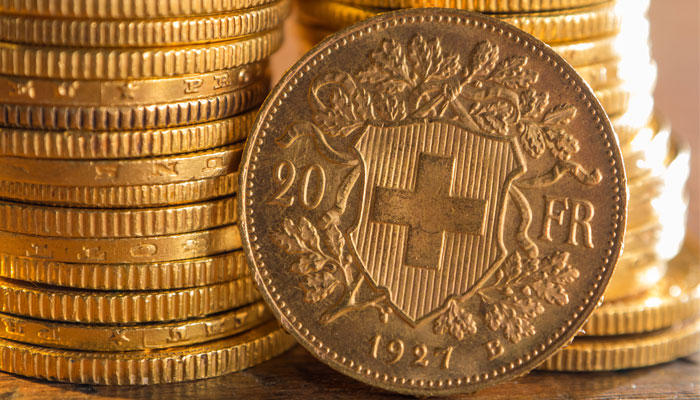
Small in size. Rich in history. And still among the most practical fractional gold coins you can buy today.
There’s something quietly remarkable about a coin that was minted over a century ago, circulated through the pockets and purses of French merchants, Swiss farmers, and Austro-Hungarian aristocrats — and yet today sits in a modern investor’s stack, priced within a few percent of its gold content. That’s the story of the 20 Francs gold coin: a coin born from Napoleon’s ambitions, refined through one of history’s most ambitious monetary experiments, and still very much alive in the gold market today.
Whether you’re a coin collector drawn to the engraved portraits and Old World artistry, or a gold stacker looking for fractional gold at low premiums, the 20 Francs coin deserves a thorough look. This guide covers the full picture — history, specifications, varieties, and what to know before you buy.
A Coin Born Under Napoleon
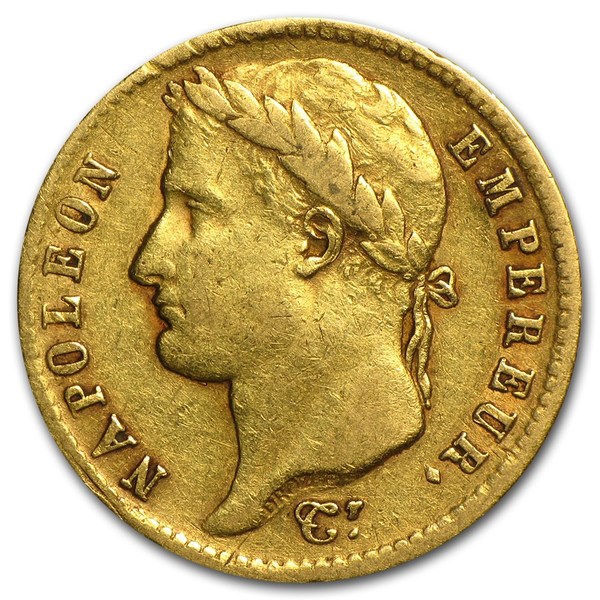
The story of the 20 Francs gold coin begins with the rise of the First French Empire. In 1803, Napoleon Bonaparte — then First Consul, not yet Emperor — overhauled the French monetary system with the introduction of the Franc Germinal, named for the spring month in the French Revolutionary calendar. The reform established the franc as France’s stable monetary unit and introduced gold coins in denominations of 20 and 40 francs.
The earliest 20 Franc gold coins bore Napoleon’s likeness on the obverse, first with the inscription “BONAPARTE PREMIER CONSUL” and later “NAPOLEON EMPEREUR” as his titles evolved. These coins were struck at mints across France and in French-controlled territories — including Turin, which struck some of the earliest issues following the Battle of Marengo in 1800.
What Napoleon understood — and what the design of these coins reflected — was that a reliable, recognizable gold coin was as much a political instrument as a financial one. Coins bearing his portrait circulated across conquered Europe, projecting the authority and permanence of the French state into commerce wherever they went.
Through the reigns that followed Napoleon’s fall — Louis XVIII, Charles X, Louis-Philippe, Napoleon III, and the Third Republic — the 20 Franc denomination persisted. The portraits changed. The designs evolved. But the gold content and dimensions remained essentially fixed, laying the groundwork for what would become an even bolder monetary experiment.
The Latin Monetary Union: One Coin for a Continent
By the mid-nineteenth century, European trade was hampered by a patchwork of national currencies that were technically similar but frustratingly inconsistent. A French 20 Franc piece might be accepted in neighboring Belgium or Italy — but only after haggling over exchange rates and tolerances.
Napoleon III, nephew of the first Napoleon and Emperor of the Second French Empire, envisioned something more unified. On December 23, 1865, France, Belgium, Italy, and Switzerland signed the treaty establishing the Latin Monetary Union (LMU) — one of the earliest attempts at a multinational monetary standard in the modern era.
The LMU’s premise was elegant: member nations would mint their gold and silver coins to identical specifications, making them interchangeable across borders without conversion. The shared standard was anchored to the French Franc: each LMU franc represented 0.290322 grams of fine gold. A 20-franc coin, therefore, contained exactly 5.805 grams of fine gold — .900 fineness, 21mm in diameter, 6.4516 grams total weight.
A 20 Franc coin minted in Brussels would be accepted at face value in Lyon. A coin struck in Rome would circulate freely in Geneva. The LMU made this legal and standardized.
Greece joined in 1868. Spain and Romania attempted to conform their currencies to LMU standards without full membership. Austria-Hungary, characteristically independent, rejected formal membership but negotiated a separate agreement with France to mint some of its gold coinage to LMU specifications — giving birth to one of today’s most beloved varieties, the 8 Florins / 20 Francs coin.
The LMU survived, in various forms, until 1927 — outlasting the First World War, the end of four of its member monarchies, and the dissolution of Austria-Hungary itself. By then, the gold standard was already eroding globally. But the coins it produced endured.
The Specifications That Matter for Buyers Today
Every LMU-specification 20 Franc gold coin — regardless of country of origin, year of minting, or monarch depicted — shares the same fundamental attributes:
| Specification | Value |
|---|---|
| Gold Content | 0.1867 troy oz (5.805g fine gold) |
| Total Weight | 6.4516g |
| Fineness | .900 (90% gold, 10% copper) |
| Diameter | 21mm |
| Edge | Milled (reeded) |
That consistency is what makes 20 Franc coins so appealing to gold stackers: every coin you pick up from any LMU member nation contains the same amount of gold. You’re comparing aesthetics and condition, not doing conversion arithmetic.
The 10% copper alloy gives these coins their characteristic warm golden hue — slightly deeper and more reddish than the cooler tone of modern .9999 pure gold coins. It also makes them more durable. After over a century in circulation, many 20 Franc coins remain in surprisingly good condition precisely because the alloy is harder than pure gold.
The Major Varieties: A Buyer’s Guide
Swiss 20 Francs — The Vreneli
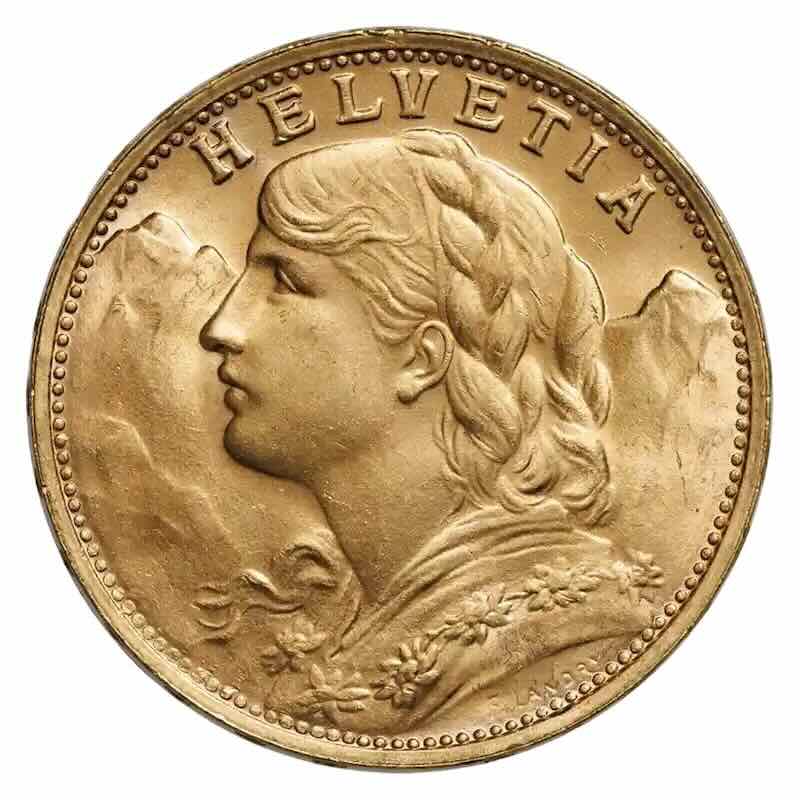
Ask a European gold dealer to show you a 20 Franc coin, and there’s a good chance they’ll hand you a Vreneli. The Swiss 20 Francs Helvetia — nicknamed Vreneli in Swiss German, a diminutive form of Verena — is arguably the most recognized and widely traded of all LMU coins.
The coin’s obverse depicts Helvetia, the personification of Switzerland, in profile wearing a flower wreath. The reverse shows the Swiss cross with the coin’s value and year. First struck in 1883 and produced intermittently through 1949, the Vreneli was minted in enormous quantities — making it one of the most available 20 Franc types on the market today, often at the lowest premiums of any variety.
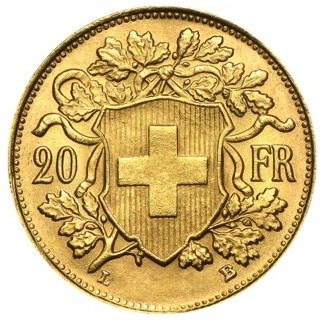
Switzerland’s official neutrality meant Vreneli production continued through both World Wars, giving the series a broader date range than most European counterparts whose minting was disrupted by conflict. For stackers, the Vreneli is frequently the benchmark: when dealers quote a “20 Franc price,” the Vreneli is often what they have in mind.
Common date Vreneli gold coins can often be purchased for just 3–6% over the gold spot price — a premium that compares favorably to modern 1 oz bullion coins, despite the Vreneli’s fractional size and historical character.
French 20 Francs Rooster — The Coq
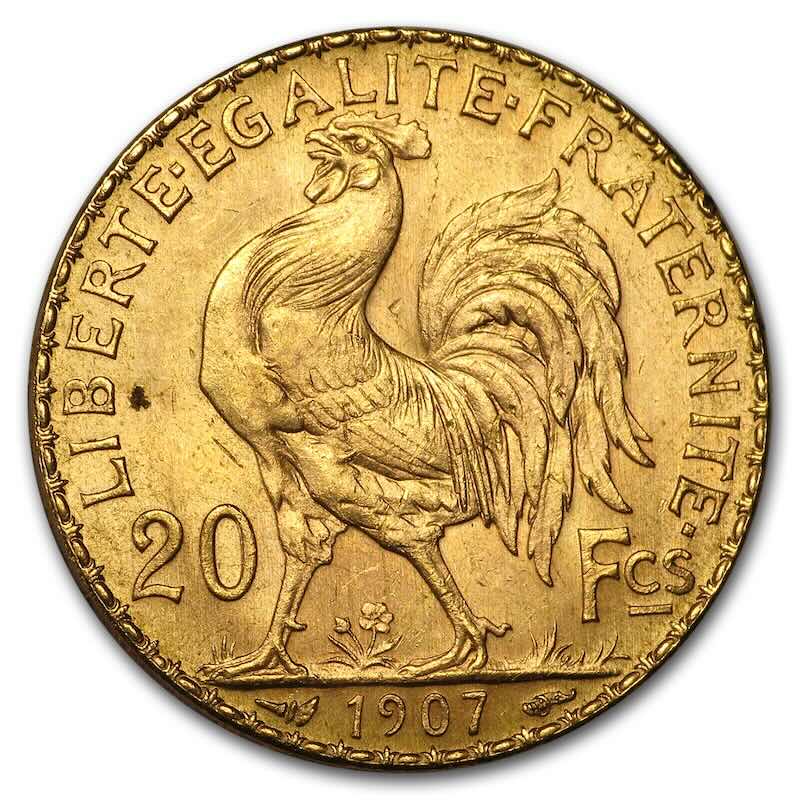
The Marianne/Rooster coin, minted from 1899 to 1914, is one of the defining images of the French Third Republic. The obverse shows Marianne — the allegorical female figure representing the French Republic — in a Phrygian cap, while the reverse features the Gallic Rooster (Coq Gaulois), the centuries-old national symbol of France, standing proud with olive branches at its feet.
The Rooster gold coin is beloved for its artistic quality and its historical position: struck in the final peaceful decade before the First World War swept away the old European order, these coins carry the last golden age of Belle Époque France in their design. They circulated widely, were minted in large numbers, and today represent one of the most common French 20 Franc types available.
For coin collectors, the Rooster is an attractive type coin because of its clean, readable design and strong secondary market. For stackers, it’s simply a well-recognized French 20 Franc at a fair price.
French 20 Francs Napoleon III
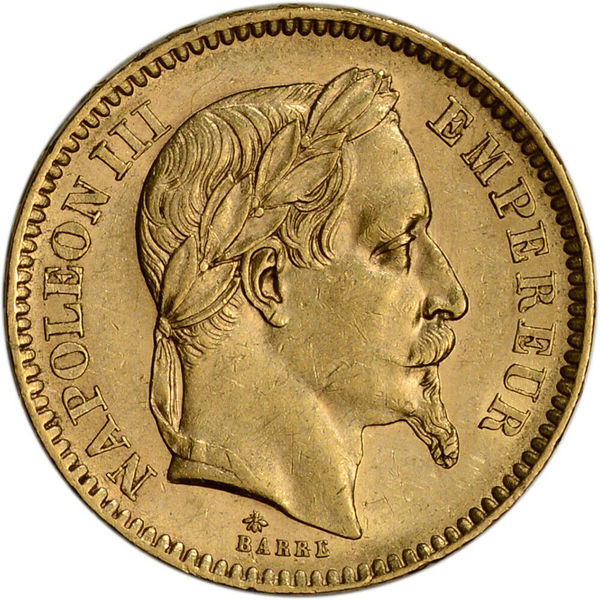
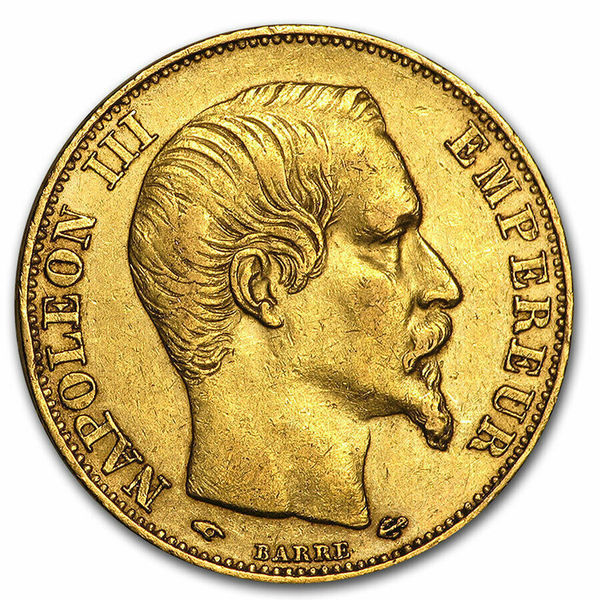
Napoleon III reigned as Emperor from 1852 to 1870, and the 20 Franc coins struck during his rule reflect the gravitas and ambition of his empire. Several distinct portrait types were issued over his reign — a bare head portrait in the 1850s, later a laureate head — with the reverse bearing the imperial eagle and denomination.
Beyond their beauty, Napoleon III coins carry the distinction of being struck during the very period the Latin Monetary Union was conceived and launched. A Napoleon III 20 Franc in your hand is a direct artifact of the political moment that created the LMU treaty in 1865 — the coin that inspired the standard, struck by the emperor who built it.
These coins are slightly less common than Vreneli or Rooster types in today’s market, giving them a mild additional premium among collectors, but they remain priced close to melt for common dates.
French 20 Francs Lucky Angel — The Angel
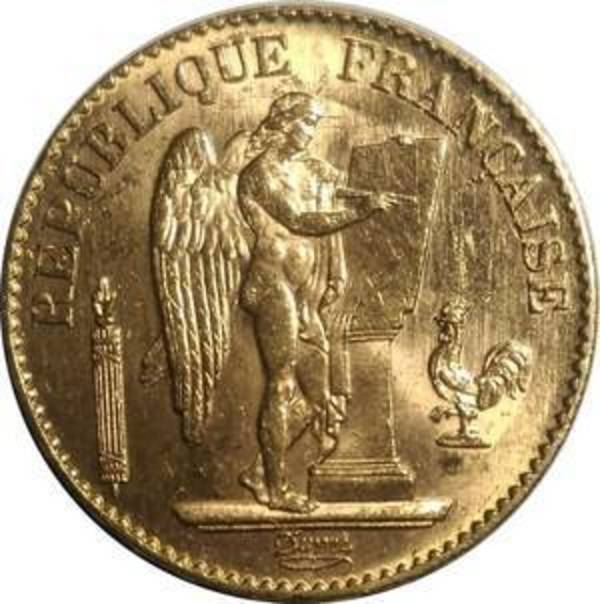
Of all the 20 Franc varieties, none carries a more evocative legend than the Angel coin — known in collector circles as the “Lucky Angel” or the “Lucky Napoleon.”
The Angel design, originally introduced in the late eighteenth century during the French Revolutionary period, depicts the Archangel writing the Constitution of the French Republic. The design was revived during the Third Republic, with Angel-type 20 Franc coins struck from 1871 through 1898 alongside the Ceres type.
The “lucky” designation stems from a legend that has circulated among coin enthusiasts for generations: that Napoleon Bonaparte carried an Angel franc as a personal talisman, and that the coin’s presence protected him through the battles that built his empire. Whether historically verifiable or not, the story lent the coin an enduring reputation as a bearer of good fortune — and collectors have called it the Lucky Angel ever since.
Today, the Lucky Angel gold coin commands a modest collector premium above other Third Republic types. Many buyers hold them not just as gold, but as a piece of numismatic folklore with a three-century-old story attached.
Austrian 8 Florins / 20 Francs — The Franz Joseph
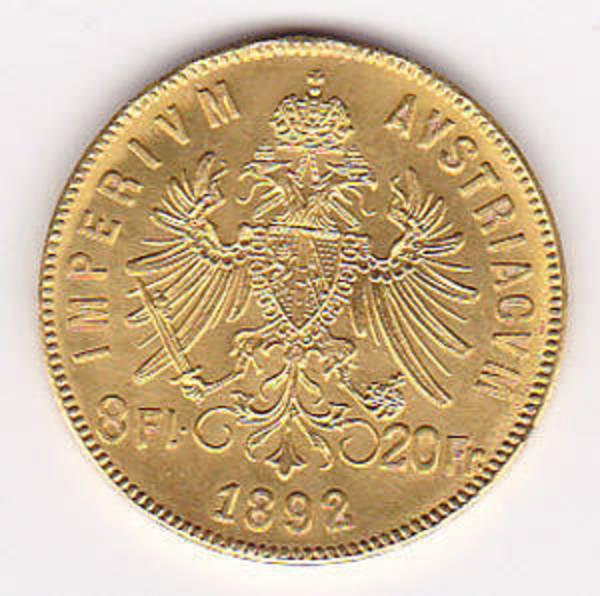
Austria-Hungary’s refusal to formally join the Latin Monetary Union didn’t stop the empire from minting gold coins to LMU specifications. Under a bilateral agreement with France, Austria-Hungary produced the 8 Florins / 20 Francs coin — denominated in both the Austrian Florin and the LMU Franc, and containing the identical 5.805 grams of fine gold as every other LMU-spec coin.
The obverse features the profile of Emperor Franz Joseph I, whose 68-year reign (1848–1916) made his portrait one of the most minted in European numismatic history. The reverse displays the Imperial Eagle with the dual denomination prominently marked.
Minted from 1870 through 1892 — when Austria-Hungary’s monetary reform replaced the Florin with the Krone — the 8 Florins / 20 Francs is one of the shorter-lived varieties, which adds to its collector interest. It’s also unique among 20 Franc types in bearing a dual-denomination inscription, a visible reminder of its unusual diplomatic origin.
For collectors, the Franz Joseph coin is distinctive and historically rich. For stackers, it offers the same fractional gold content as every other LMU coin in a less-commonly-seen design — often priced near but slightly above common Vreneli or Rooster pieces.
Belgian 20 Francs and Italian 20 Lire
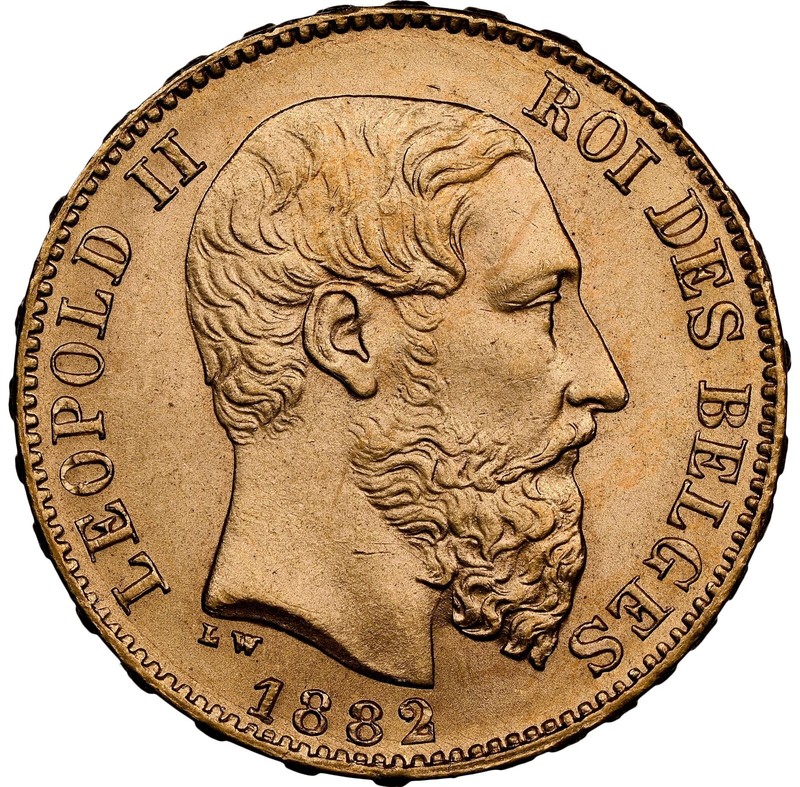
Belgium and Italy, as founding LMU members, produced substantial quantities of 20 Franc-specification gold coins throughout the Union’s active period.
Belgian 20 Francs feature portraits of successive Belgian kings — Leopold I, Leopold II, and Albert I — with the Belgian Lion on the reverse. These circulated widely within Belgium and across LMU trade routes and remain available today at prices close to other common LMU types.
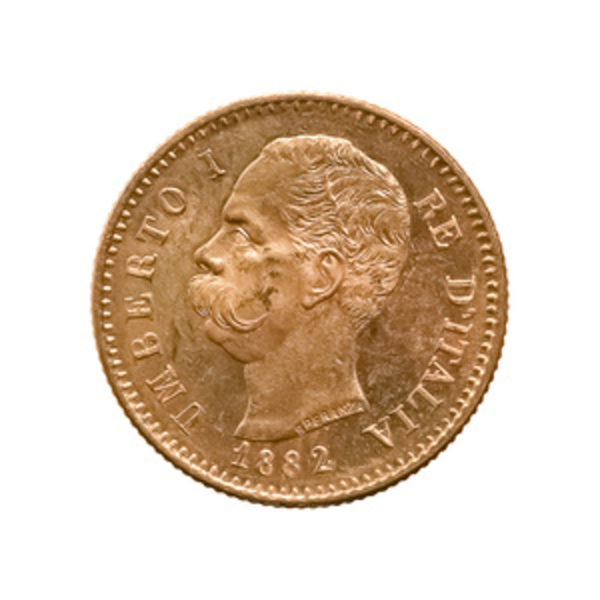
Italian 20 Lire (the Italian LMU equivalent, 20 Lire = 20 Francs) feature the portraits of the unified Italian kingdom’s monarchs — Victor Emmanuel II, Umberto I, and Victor Emmanuel III. Italian gold coins of this period are particularly popular among collectors of Risorgimento-era history and European numismatics.
Both Belgian and Italian varieties typically trade at premiums comparable to common French issues and offer an excellent way to build a geographically diverse LMU collection without paying significant above-melt prices.
Why Gold Stackers Love 20 Franc Coins
Modern bullion investors have rediscovered 20 Franc coins for reasons that have nothing to do with nostalgia. The economics are simply compelling.
Low premiums over spot. Common-date LMU coins — Vreneli, Rooster, Belgian 20 Francs — frequently trade at 3–8% over spot price, well below the premiums on modern government-minted bullion coins. For stackers accumulating gold by the ounce, lower premiums mean more gold per dollar spent.
Fractional size without the fractional penalty. Modern fractional gold coins (1/4 oz Eagles, 1/10 oz Maples) typically carry punishing premiums — sometimes 15–25% over spot — because their smaller size means higher per-unit production cost. The 20 Franc, at 0.1867 oz, is genuinely fractional gold without that premium penalty, precisely because millions were minted a century ago and the secondary market is deep and liquid.
Collector floor. Unlike a gold bar, a 20 Franc coin will never trade for less than its numismatic interest warrants among collectors, even in a depressed gold market. The historical pedigree provides a soft floor beyond pure melt value.
Divisibility for selling. When it comes time to sell, individual coins are easier to liquidate in small amounts than a 1 oz bar. A seller can move two Vreneli this month and three next month without cutting a bar or paying premium again.
What to Look for When Buying
Condition matters for premium, not for melt. A circulated Very Fine (VF) 20 Franc coin and an Uncirculated (MS) example contain identical gold. For pure stacking purposes, circulated coins in good detail are the economical choice. For collectors building a type set or seeking specific dates, higher-grade coins justify their premium.
Check for cleaning. Like all antique gold coins, 20 Franc pieces are sometimes cleaned — polished or dipped to restore luster. Cleaned coins may look bright but lose collector value. Look for natural, even wear rather than artificial shine under direct light.
Date premiums. Most LMU 20 Franc coin types have common dates that trade near melt and key dates that carry numismatic premiums. Knowing which years are scarce within your preferred variety prevents overpaying for a “common coin” presentation of a genuinely scarce date.
Counterfeit awareness. LMU coins have been counterfeited, primarily in base metal rather than gold (so they won’t pass a basic weight or magnet test). A coin that doesn’t match the 6.4516g standard weight or passes a magnet should be rejected immediately. Reputable dealers test and guarantee their inventory.
Buying 20 Francs Gold Coins: Comparing Prices
Because 20 Franc coins trade from multiple dealers at varying premiums, price comparison matters more than it might for a standardized modern bullion product. Dealer premiums on the same Vreneli or Rooster can differ by 2–4 percentage points — meaningful when you’re building a stack.
Tracking live gold prices and dealer comparisons across major bullion sellers gives you the baseline you need to evaluate any 20 Franc offering. FindBullionPrices.com’s live gold price comparison covers pricing across more than a dozen major U.S. bullion dealers in real time — useful for benchmarking before making a purchase.
Frequently Asked Questions
Are 20 Franc gold coins a good investment? For long-term gold holders, 20 Franc coins offer genuine advantages: low premiums over spot, real fractional sizing, and numismatic interest that provides a floor above pure melt value. They are not a get-rich-quick vehicle, but as a cost-efficient way to hold physical gold with historical character, they’ve earned their enduring popularity.
Do all 20 Franc coins contain the same amount of gold? Yes — all coins minted to LMU specifications contain 0.1867 troy oz (5.805g) of fine gold at .900 fineness, regardless of country of origin. Belgian, French, Swiss, Italian, and Austrian varieties are equivalent in gold content.
Are 20 Franc coins legal tender today? No. While they were legal tender in their issuing countries during the LMU era, none retain legal tender status in modern currency systems. They are traded as bullion and collectible coins.
What is the difference between a 20 Franc and a Napoleon gold coin? “Napoleon” is an informal name often applied to French 20 Franc gold coins bearing Napoleon’s portrait — specifically Napoleon I and Napoleon III issues. The term is sometimes used colloquially for any French 20 Franc gold coin. All are the same denomination and gold content.
Why is the Angel coin called “Lucky”? The “Lucky Angel” name derives from a popular legend that Napoleon Bonaparte carried an Angel-design franc as a personal talisman, believing it brought him protection in battle. Though the historical record is anecdotal, the story stuck, and the Angel coin has been called lucky ever since — making it a perennially appealing gift as well as a collectible.
What’s the best 20 Franc coin for a first-time buyer? The Swiss Vreneli is the most recommended starting point: widely available, deeply liquid, competitively priced, and instantly recognizable to dealers worldwide. From there, exploring the French Rooster, Napoleon III, and Angel types lets you build a collection that spans the breadth of LMU history.
The 20 Francs gold coin is one of the rare things in the precious metals world that rewards both the collector and the investor — history you can hold, gold you can stack, at a price that makes sense. After more than a century, that combination is hard to argue with.
Even though most were minted well over 100 years ago, 20 Francs Gold Coins are among today’s most popular fractional gold coins.
The 20 Francs Gold Coin began as a French coin in the 1800s during the First Empire. The first coins were struck in Turin, under French control, following the Battle of Marengo. The coin featured a helmeted soldier facing left wearing a laurel wreath upon his head.
Napoleon Bonaparte introduced the Napoleon gold coin in 1803. The obverse featured a left-facing bust of Napoleon I surrounded by the words “BONAPARTE PREMIER CONSUL.”
Latin Monetary Union
During the first half of the 19th century, the 20 Franc Napoleon gold coins circulated throughout France. By the mid-1800s, Napoleon III, the nephew of Napoleon I, envisioned a unified Europe. By treaty on December 23, 1865, France, Belgium, Italy, and Switzerland formed the Latin Monetary Union (LMU).
The LMU created a unified currency that would be used for trade and recognized by all four countries. The new currency implemented by the LMU would be a bimetallism standard based on the French Franc. Each LMU Franc represented 4.5 grams of fine silver or .290322 grams of fine gold.
Several years later, Greece joined the original four countries in the treaty. Spain and Romania considered joining and attempted to conform their currency to LMU standards. Austria-Hungary rejected bimetallism and refused to join, but later signed a treaty with France to mint some of their gold currency to LMU standards.
By 1873, the LMU had moved to a gold standard due to increasing silver imports dampening prices.
Popular 20 Francs Gold Coins
LMU member countries were responsible for minting millions of 20 Franc gold coins. Today, the most popular of these coins are:
- 20 Francs Helvetia (Swiss)
- 20 Francs Rooster (French)
- 20 Francs Napoleon III (French)
- 20 Francs Lucky Angel (French)
- 8 Florins/20 Francs (Austria-Hungary)
Other common variations of the 20 Francs that can be bought for a low premium over the spot price include 20 Francs from Belgium and 20 Lira Gold Coins from Italy.