Silver doesn’t pay a dividend, doesn’t compound, and doesn’t track the broader economy the way equities do. The case for silver isn’t that it produces returns. It’s that it does a handful of things paper assets can’t do, and for a portion of a portfolio, that’s enough.
This guide covers what silver accomplishes, what it doesn’t, and how to think about whether it fits your strategy.
What Silver Does
Preserves purchasing power across long horizons. Across rolling thirty-year periods, silver has roughly held real value against inflation. Across shorter periods it’s far more volatile — silver can underperform the CPI badly for years, then recover sharply. Silver is a preservation tool, not an income tool, and the holding period matters.
Hedges currency dilution. Above-ground silver supply grows at roughly 2% per year through mining. Global money supply has grown faster than that for decades. Silver’s price reflects that imbalance over long horizons.
Insures against specific monetary risks. Silver tends to perform well during currency crises, sustained high inflation, and periods of acute institutional stress. It performs less well during ordinary recessions. Treating silver as universal crisis insurance overstates the case; treating it as insurance against monetary instability specifically is closer to right.
Adds industrial demand exposure. Roughly half of annual silver demand is industrial — solar, electronics, medical. Silver responds to economic growth in ways gold doesn’t, which adds upside in expansionary periods and downside in deep recessions.
What Silver Doesn’t Do
Generate yield. Holding silver costs storage and insurance and produces no income. Investors who need cash flow are buying the wrong asset.
Track inflation in the short term. Year over year, silver and the CPI move independently. The inflation-hedge case requires a multi-decade horizon. In any given year, silver can lag inflation by a wide margin.
Reward concentration. Silver works as a portion of a portfolio, not as a portfolio. Allocations above 20% concentrate risk in a single asset class with no yield. Most precious-metals frameworks suggest physical metal in the 5–15% range of total assets.
Receive favorable tax treatment. In the U.S., physical silver outside an IRA is taxed as a “collectible” at a maximum federal rate of 28% on long-term gains — higher than the rate on most equities. At scale this matters; an IRA structure addresses it but adds custody and liquidity constraints.
Silver vs. Gold for the Same Allocation
Gold is denser, more concentrated, more historically established as a monetary metal. Silver is cheaper per ounce, typically 1.5–2× more volatile, more sensitive to industrial demand, and arguably has more upside in monetary-instability scenarios. Investors who want simpler concentrated exposure default to gold. Investors who want more upside potential and accept the volatility lean toward silver. Many experienced metals investors hold both — gold weighted heavier as a portfolio anchor, silver weighted for asymmetric upside.
Where Format Fits In
Once silver is in the strategy, the buy-side cost (premium) becomes the variable the buyer fully controls. A 5–10 percentage point spread between buying smart and buying badly compounds across a serious accumulation. Comparing dealer pricing across multiple retailers before every purchase is the single highest-leverage discipline a physical silver buyer can develop.
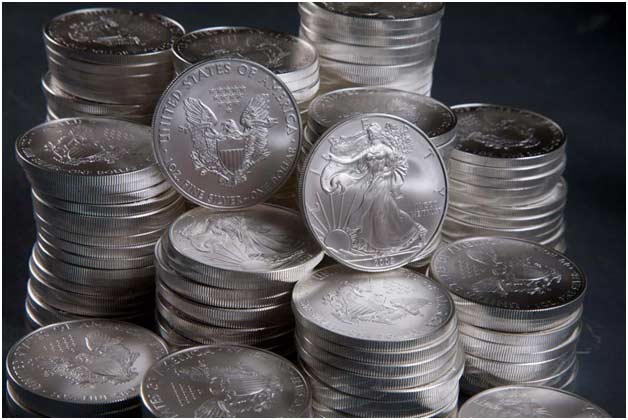
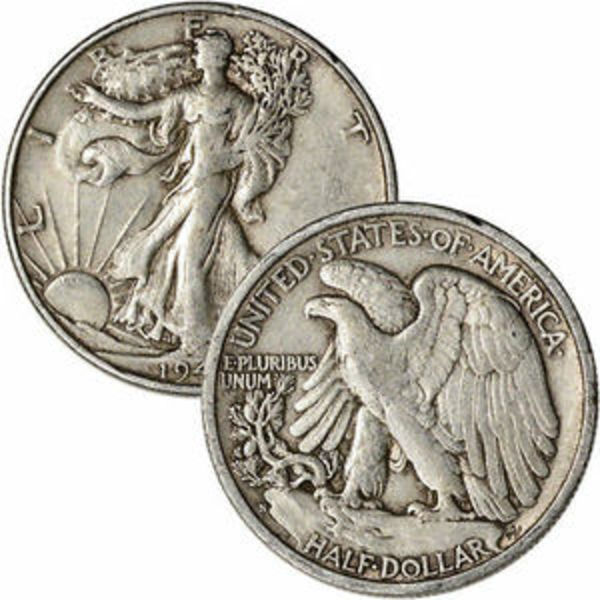
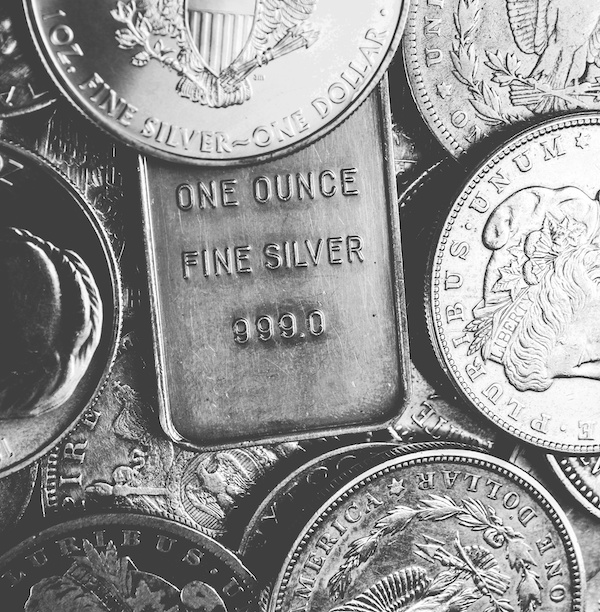
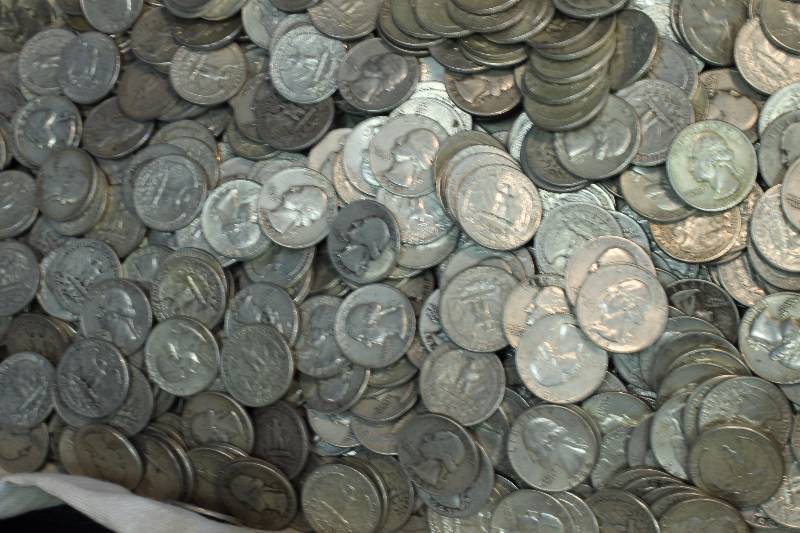
Format choice depends on the goal. Cost-per-ounce buyers weight toward larger silver bars and 90% junk silver. Liquidity-focused buyers weight toward American Silver Eagles or Canadian Maple Leafs. Investors who view silver as a barter or transaction reserve weight toward junk silver for divisibility. Most serious holders run a mix.
The silver bars vs. coins comparison walks through how premium varies by format. The Silver Eagles vs. generic rounds analysis covers the round-trip cost calculation most investors miss. The silver bar sizes guide covers the premium-vs-divisibility trade-off.
How Much, and How to Start
There’s no universally right allocation. The standard framework ov 5–15% of investable assets in physical metal is a starting point, not a rule. Investors with stronger inflation or monetary-instability concerns weight higher; investors more comfortable with paper assets weight lower. Holding zero precious metal is itself a position.
For new buyers, the practical advice is straightforward: start small, dollar-cost average rather than trying to time, and compare dealer prices on every purchase. A first physical silver position of one to two hundred ounces is enough to learn how dealers transact, how delivery and storage work, and how the buy-side and sell-side spreads behave in practice. Scale from there.
Bottom Line
Silver is wealth preservation, not wealth growth. It hedges currency dilution, monetary instability, and sustained inflation — risks paper assets don’t address well. It doesn’t replace equities, doesn’t produce yield, and doesn’t track inflation reliably year to year. For a portion of a portfolio held over a long horizon, by a buyer who knows what the metal does and doesn’t do, it earns its place. For a buyer who needs growth, income, or short-term predictability, it doesn’t.
Compare silver pricing across dealers in real time on FindBullionPrices.com.
Related Guides
- Silver Bars vs. Coins: Which Is Right for You?
- Silver Eagles vs. Generic Rounds
- Silver Bar Sizes Guide
- Why 90% Silver Coins Are the Most Interesting Buy in Precious Metals
- How to Buy Silver Bars
This article is for informational purposes only and does not constitute financial or investment advice. Past performance is not indicative of future results. Investors should consult with a qualified financial advisor before making investment decisions.